How to keep your dog calm on Thanksgiving: guests, food and a quiet room
Doorbells, new people, a kitchen full of smells and a turkey at nose height: Thanksgiving is a lot for a dog. A little planning keeps the day calm for everyone, including the dog.
Thanksgiving packs a lot into one day: guests at the door, a busy kitchen, new smells, loud cheering at the TV and a schedule that goes out the window. Some dogs love the party. Many find it overwhelming. The good news is that a calm Thanksgiving mostly comes down to a few simple things you set up before anyone rings the bell.
1. Why Thanksgiving is a lot for dogs
Even easygoing dogs can get overloaded when several of these hit at once:
| What happens | How it feels to a dog |
|---|---|
| Doorbell and new people | Every knock is "news". A stream of guests means barking, jumping and lots of hands reaching over their head. |
| A kitchen full of food | The best smells of the year, dropped scraps and a counter at nose height. Hard to resist and easy to get into trouble. |
| No normal routine | Walks, meals and naps get pushed around. A tired, hungry dog is a jumpy dog. |
| Noise and excitement | Loud talking, kids running, clattering pans and cheering at the game can feel like chaos. |
| Open doors | Guests coming and going leave lots of chances for a quick dash outside. |
2. The week before
- Pick a quiet room. Choose a spare bedroom, office or laundry room away from the front door and the kitchen. Add your dog's bed, water, a favorite toy and something that smells like you. Spend a few minutes there with treats each day so it feels like a treat, not a time-out.
- Practice "go to your bed". Toss a treat onto a mat or bed, reward your dog for lying down on it, and slowly add a little distance and distraction. Even a few short sessions help on the big day.
- Stock up on long-lasting chews and food puzzles that your dog already knows and digests well. Thanksgiving isn't the day to try a brand-new chew.
- Check ID. Make sure the collar tag has your current phone number and the microchip details are up to date with the registry.
- Tell your guests. A quick message helps: "Please don't feed the dog, and keep the front door closed." If guests are bringing their own dog, think about whether the two have met before and whether your space is big enough.
- Going away instead? Write down feeding times, walks and your vet's number for whoever is looking after your dog. Our pet sitter checklist covers what to include.
3. Thanksgiving morning
- Go for a long, sniffy walk. Sniffing is tiring for the brain, not just the legs. A dog who has had a good walk and a game of fetch is much more likely to nap through dinner.
- Keep meals on time. Feed breakfast and dinner at the usual times so your dog isn't hungry and hunting for scraps.
- Set up the quiet room before guests arrive, not once the doorbell is going. Turn on soft music or a fan to cover noise from the rest of the house.
- Hand out a food puzzle or chew as you close the door, so the quiet room starts with something good.
4. When guests arrive
- Keep your dog in the quiet room, behind a baby gate or on a leash while guests come in. The first few minutes at the door are the most exciting.
- Once coats are off and everyone is sitting down, let your dog come out to say hello if they enjoy people. Keep a leash on for jumpers.
- Ask guests to let the dog come to them, to pet the chest or the side instead of the top of the head, and to stop if the dog walks away.
- Kids and dogs need an adult watching at all times. Teach kids not to hug, chase or bother a dog who is eating or lying on their bed.
- Give your dog a break in the quiet room every hour or so, or any time you notice stress signs.
Stress signs to watch for: lip licking, yawning, turning away, showing the whites of the eyes, a tucked tail, ears pinned back, panting when it isn't hot, pacing or hiding. A dog who is trying to get away is telling you they've had enough, so help them out.
Not every dog is a party dog, and that's fine. Some dogs are happiest spending the whole afternoon in their room with a chew and checking in once the house is quiet again.
5. Keep the feast off the floor
The food is often the biggest Thanksgiving risk. Our golden retriever Max can clear a coffee table in one swipe of the tail, and he isn't the only one. A few habits go a long way:
- No feeding the dog from the table, for anyone. Guests mean well, but ten "little bites" add up to an upset stomach.
- Never give cooked bones. Turkey bones can splinter and get stuck in the throat or gut.
- Skip the skin, fat, gravy and drippings. Rich, fatty food can cause vomiting and diarrhea, and in some dogs a painful inflammation of the pancreas.
- Watch the sides and desserts. Stuffing often has onion and garlic, some baked goods have raisins, chocolate or the sweetener xylitol, and raw bread dough can expand in the stomach. All of these can be harmful.
- Lock down the trash. A trash bag full of carcass, string and foil is the jackpot. Take it straight outside to a lidded bin.
- Keep plates, drinks and the counter edge clear. Push food to the back of the counter and don't leave plates on low tables.
Wondering if your dog can have a bite? A small piece of plain, boneless, skinless white turkey meat is usually fine for most dogs. Check any food in seconds with our free pet food safety checker, for example turkey, cooked bones or stuffing. For the full list, see holiday foods dogs and cats can't eat.
6. Stop the door dash
- Put a small sign on the inside of the front door: "Please check where the dog is before opening."
- Use the quiet room or a gate during arrivals and goodbyes, when the door is open the most.
- Keep the collar and tag on all day, even indoors.
- Low, curious dogs like our corgi Biscuit can slip past legs in a second, so do a quick head count before anyone steps outside.
7. After the meal
Take your dog out for a calm evening walk once the dishes are done, then let them settle somewhere quiet. Get back to the usual routine the next day. If your dog seemed very scared or stressed, make a note of it so you can plan more breaks, or a quieter setup, for the next holiday.
8. Don't forget the cats
Most cats prefer to skip the party altogether. Set them up in a closed room with their litter box, water, food and a hiding spot, and hang a "please keep closed" note on the door. Turkey skin, gravy, onion and garlic are just as risky for cats, and string from a roast is a real danger if swallowed.
When to call your vet
Call your vet if you notice any of these:
- Your pet ate cooked bones, a roast string or foil, a lot of fatty food, or anything with onion, garlic, raisins, chocolate or xylitol
- Repeated vomiting or diarrhea, a painful or hunched belly, not eating, or seeming very tired
- A swollen, tight belly with restlessness, drooling or trying to vomit without bringing anything up. This can be an emergency, especially in large, deep-chested dogs, so go to the vet right away.
- Stress so strong that your dog can't settle, hides for hours, or snaps at people. Ask your vet about a plan for future holidays, since every dog's needs are different.
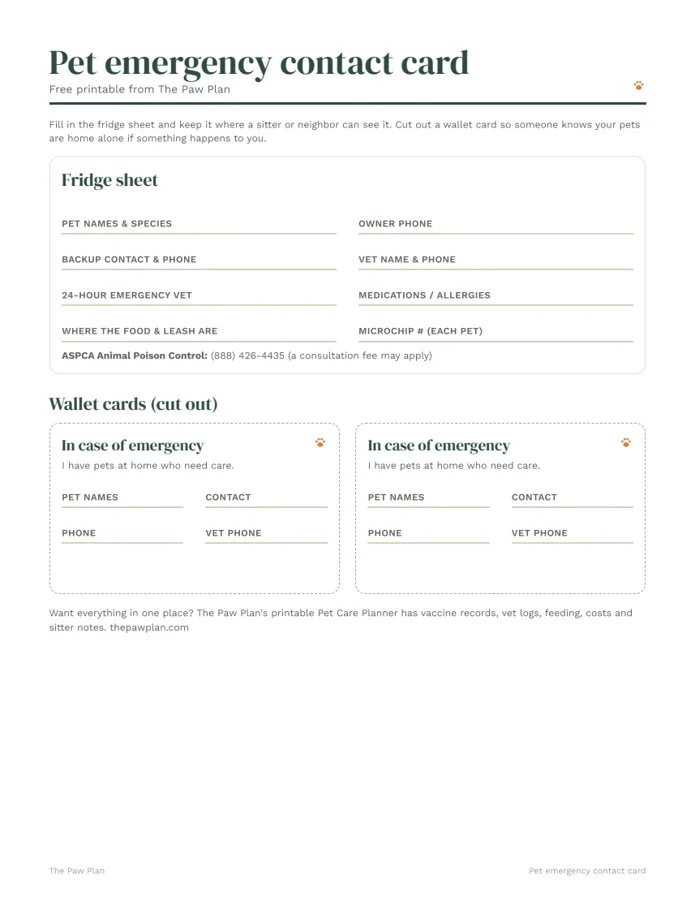
If you think your pet ate something toxic, don't wait for signs: call your vet, an emergency vet or an animal poison control line now. US animal poison control lines: (888) 426-4435 or (855) 764-7661 (a consultation fee may apply).
Calm Thanksgiving checklist
- Quiet room set up with a bed, water, a chew and soft music.
- Long walk and play time in the morning.
- Meals at the usual times.
- Dog in the quiet room or behind a gate while guests arrive.
- Guests know: no table scraps, door closed.
- Bones, skin, gravy and desserts out of reach; trash outside in a lidded bin.
- Collar and ID tag on, microchip details current.
- Your vet's number and the nearest emergency vet saved in your phone.
Traveling instead of hosting? See our traveling with a dog checklist or the holiday boarding checklist.
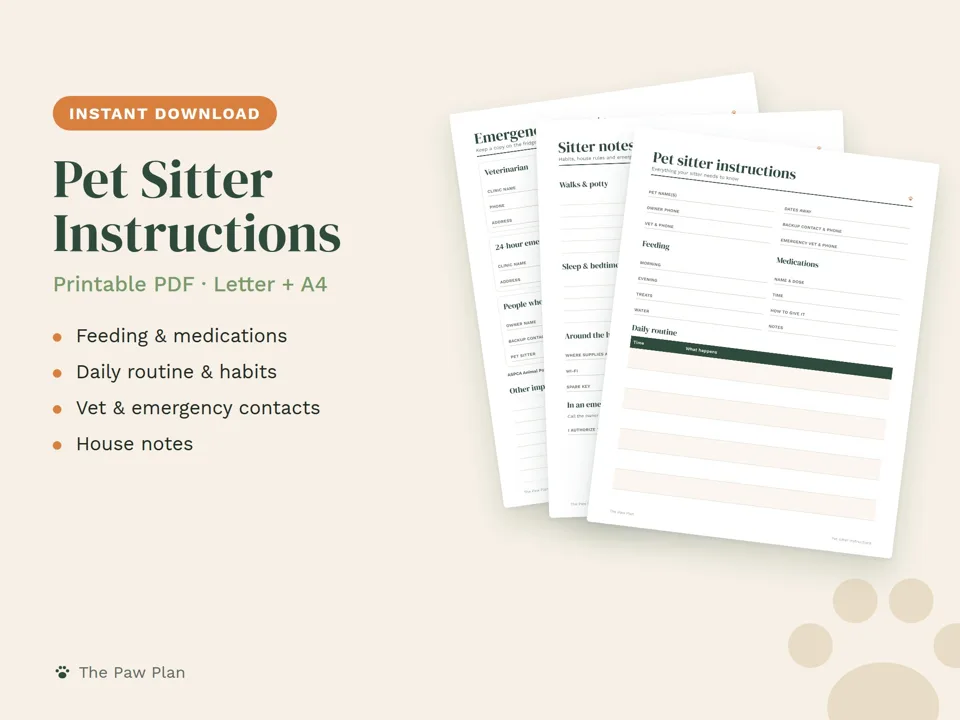
Heading out for the holiday?
Our printable Pet Sitter Instructions sheet puts meals, walks, quirks, your vet's number and emergency contacts on one page. Instant download for dogs and cats: print it, fill it in and stick it on the fridge.
Instant answers for 130+ foods and plants
Type any food, plant or household item, like turkey or stuffing. Get safe, caution or toxic for dogs and cats, with what to do.
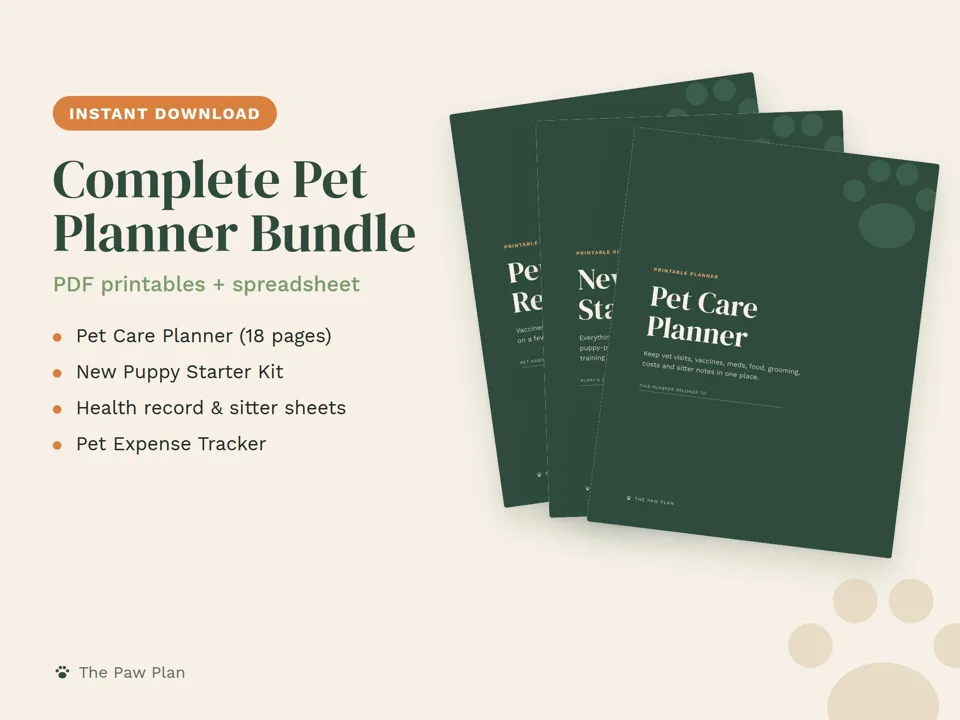
Shopping for a pet person?
Funny tees and mugs, embroidered hats, engraved bracelets and instant-download planners for dog and cat people. Christmas delivery: order by Nov 30 (personalized items by Nov 25).
Questions people ask
How do I keep my dog calm when guests come over for Thanksgiving?
Tire your dog out with a long sniffy walk in the morning, set up a quiet room with water, a bed and a long-lasting chew, and put your dog there or behind a gate before the doorbell starts. Let your dog come out to say hello once things settle, on a leash if needed, and give breaks whenever they look stressed.
Can my dog eat Thanksgiving turkey?
A small piece of plain, boneless, skinless white turkey meat is usually fine for most dogs. Skip the skin, fat, gravy, stuffing and anything seasoned with onion or garlic, and never give cooked bones. Ask your vet first if your dog has a sensitive stomach or a health condition.
What are signs my dog is stressed by visitors?
Lip licking, yawning, turning away, showing the whites of the eyes, a tucked tail, pinned-back ears, panting when it isn't hot, pacing or hiding. If you see these, calmly take your dog to their quiet room for a break.
Should I put my dog in a crate during Thanksgiving dinner?
If your dog already likes their crate, it makes a great safe spot during the meal. Don't use a crate for the first time on a busy day; a closed room or a baby gate with a comfy bed works just as well.
What should I do if my dog eats turkey bones?
Don't try to make your dog vomit unless a vet tells you to. Call your vet or an emergency vet right away and tell them what was eaten and how much. Watch for vomiting, a swollen belly, straining, not eating or lethargy.
Save this for later.
Pin it to your pet board so it's there when you need it.
The Paw Plan shares general information, not veterinary advice. Every pet is different, so check with your vet about your pet's health, diet and care.
More guides you'll like
Holiday foods dogs and cats can't eat
From the Thanksgiving turkey to the New Year's cheese board, holiday food is everywhere. Here's what to keep off your pet's plate, what's fine in small amounts, and what to do if they help themselves.
Read the guide →Pet sitter checklist: what to leave before you travel
Clear instructions help your pet feel safe and your sitter feel confident. Here's everything to write down.
Read the guide →Winter paw care for dogs: salt, ice, snow and cracked pads
Cold pavement, rock salt and dry indoor heat are tough on paws. Here's a simple before-and-after-walk routine that keeps your dog's feet comfortable all winter.
Read the guide →One easy pet-care tip a week.
Short, practical and friendly. Join free and get our printable pet emergency contact card right away.
One email a week. Unsubscribe any time.