The holidays are the busiest time of year for pet poison calls, and it's easy to see why. There's more rich food than usual, it sits out on low tables for hours, guests slip scraps under the table, and everyone is a little distracted. The good news: most problems are easy to prevent once you know the handful of foods that cause the most trouble.
This guide covers dogs and cats. Cats are usually pickier eaters, but they are more sensitive to some foods (onions and garlic especially), so don't assume a cat will leave something alone.
The biggest holiday dangers
| Food | Where it hides | Why it's a problem |
|---|---|---|
| Chocolate | Cookies, fudge, brownies, candy boxes, hot cocoa, gifts under the tree | Contains theobromine and caffeine. Can cause vomiting, a racing heart, tremors and seizures. Dark and baking chocolate are the most dangerous. |
| Xylitol | Sugar-free cookies, gum, mints, some peanut butters and baking mixes | In dogs it can cause a sudden drop in blood sugar and liver damage, even in small amounts. |
| Grapes, raisins and currants | Fruitcake, stollen, mince pies, panettone, cheese boards, trail mix | Can cause kidney injury in dogs. There is no known safe amount. Keep them away from cats too. |
| Onions, garlic, leeks and chives | Stuffing, gravy, casseroles, soups, seasoned meat | Damage red blood cells. Cats are even more sensitive than dogs. Signs can show up days later. |
| Cooked bones | Turkey carcass, ham bone, chicken wings, the trash can | Can splinter and cause choking, mouth injuries or blockages in the gut. |
| Fatty scraps | Turkey skin, drippings, ham, gravy, butter | Can cause vomiting and diarrhea, and are linked to pancreatitis, a painful condition that can need hospital care. |
| Alcohol | Eggnog, punch, rum cake, unattended glasses | Pets are much more sensitive to alcohol than people. Even small amounts can be dangerous. |
| Raw bread dough | Rising rolls on the counter | Expands in the stomach and produces alcohol as the yeast ferments. |
| Macadamia nuts | Cookies, nut mixes, gift tins | Can cause weakness, wobbliness and tremors in dogs. |
Not sure about something on the table? Look it up in seconds with our Can my dog eat this? food checker. It covers 130+ foods and plants for dogs and cats, including stuffing, ham, gravy and nutmeg.
Sneaky risks people forget
- Nutmeg and heavy spices. Nutmeg is a problem in larger amounts. A lick of pumpkin pie is unlikely to cause trouble, but a dog that eats a whole pie is also getting sugar, fat and spice all at once.
- Corn on the cob. The cob doesn't break down and is a common cause of blockages in dogs.
- Meat strings, foil, skewers and wrappers. Anything that smells like turkey is fair game to a dog. String and netting are especially dangerous for cats, because they can bunch up the intestines.
- Blue cheese and moldy leftovers. Moldy food in the trash can cause tremors in dogs. Take the trash out, and use a can with a locking lid.
- Salty snacks and cured meat. Chips, pretzels, salami and ham are high in salt and fat. A bite won't usually hurt, but a whole plate can.
- Coffee and tea. Grounds, tea bags and chocolate-covered espresso beans all contain caffeine.
Holiday foods that are OK to share (in small amounts)
Want your pet to feel included? These are generally fine for healthy dogs and cats, as long as they are plain: no butter, salt, onion, garlic, sauce or seasoning.
- Plain cooked turkey (white meat, no skin, no bones). See turkey in the checker.
- Plain green beans or carrots, steamed or raw.
- Plain canned pumpkin, not pie filling, which has sugar and spice.
- Plain cooked sweet potato, with no marshmallows or brown sugar.
- A few plain cranberries or apple slices without seeds. Cranberry sauce is too sugary.
A good rule of thumb is to keep treats and extras to about 10% of your pet's daily calories. For a small dog or a cat, that's only a couple of bites of turkey. Our food calculator shows roughly how many calories your pet needs in a day, so you can see how quickly extras add up. If your pet has a sensitive stomach, a medical condition or a special diet, ask your vet before sharing anything new.
A simple plan for the big meal
- Feed your pet their normal meal first. A full pet is less likely to go looking for leftovers.
- Tell guests the house rule: no feeding the pets. Kids are the most generous sharers, so give them a small bowl of pet-safe treats to hand out instead.
- Use a quiet room or a gate during cooking and dinner. It also stops pets from slipping out the door as guests arrive.
- Keep plates and drinks up high. Coffee tables, chairs and low buffets are easy targets.
- Clear the table fast and bag the carcass, bones and strings. Take them straight outside to a covered bin.
- Check the gift pile. Wrapped chocolates and food gifts smell great to a dog, even under paper.
If your pet eats something they shouldn't
Stay calm and act quickly. Many poisonings are easier to treat when you call early, before signs appear.
- Move your pet away from the food and pick up what's left.
- Work out what and how much. Keep the wrapper or package, note the time and know your pet's weight.
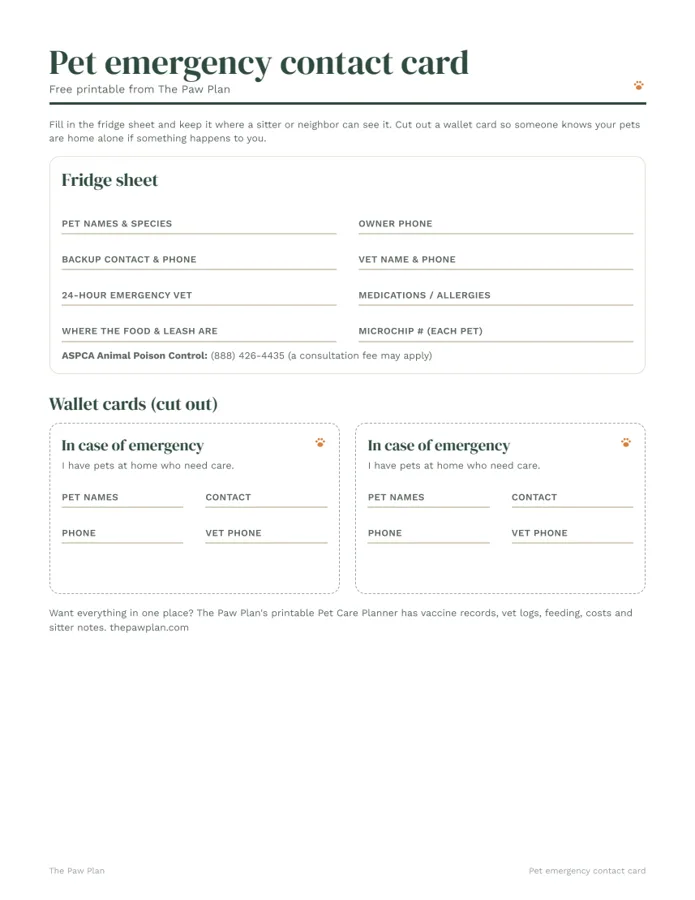
- Call your vet, the nearest emergency vet, or an animal poison control line. US animal poison control lines: (888) 426-4435 or (855) 764-7661 (a consultation fee may apply).
- Don't make your pet vomit unless a vet tells you to. It isn't safe for every pet or every substance.
Holiday hours change, so look up your nearest 24-hour emergency vet now and save the number in your phone. Our pet first aid kit checklist shows what else to keep on hand.
Hosting or traveling?
If your pet is staying with a sitter or at a boarding facility over the holidays, write the food rules down. Leave the exact food, the amount and a short "never feed" list (chocolate, grapes and raisins, onions and garlic, bones, xylitol). Our holiday boarding checklist and pet sitter checklist walk you through it, and our printable pet sitter sheet makes it a two-minute job.
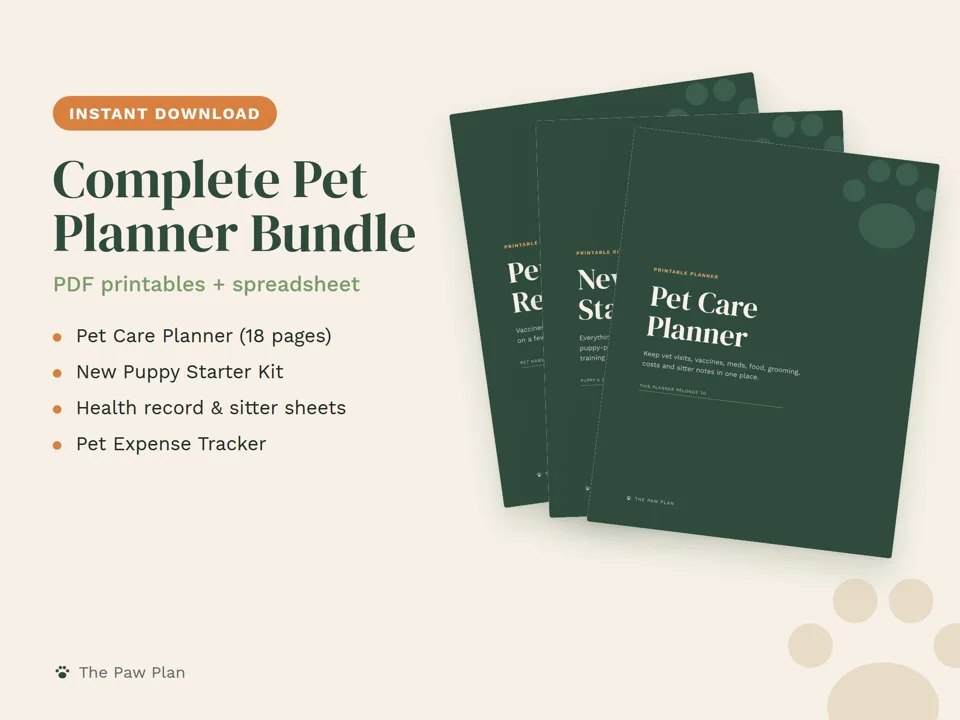
A calmer season starts with a plan.
Our complete pet bundle has the care planner, health record, sitter sheet, puppy kit and expense tracker. Instant download, and a great gift for any pet parent.
Instant answers for 130+ foods and plants
Type any food. Get safe, caution or toxic for dogs and cats, with what to do.
Shopping for a pet person?
Funny tees and mugs, embroidered hats, engraved bracelets and instant-download planners for dog and cat people. Order made-to-order gifts by early December.
Questions people ask
Can dogs eat turkey?
Plain, cooked, boneless turkey with no skin or seasoning is fine for most dogs in small amounts. Skip the skin, drippings, gravy, stuffing and bones, which can cause stomach upset, pancreatitis or blockages.
Can cats eat turkey?
A few small bites of plain cooked turkey with no skin, bones or seasoning are usually fine for healthy cats. Avoid anything cooked with onion or garlic, which are especially harmful to cats.
Is stuffing safe for dogs?
No. Most stuffing is made with onions, garlic, leeks or chives, which damage red blood cells in dogs and cats. It is also often rich and buttery. Keep it off your pet's plate.
Can dogs eat ham?
It's best to skip it. Ham is very salty and fatty, which can cause vomiting and diarrhea and is linked to pancreatitis. Ham bones can splinter.
Is pumpkin pie OK for dogs?
Plain canned pumpkin is fine in small amounts, but pumpkin pie has sugar, fat and spices like nutmeg. A lick is unlikely to cause harm, but don't share a slice. Check crusts and toppings for xylitol.
How much chocolate is dangerous for a dog?
It depends on the type of chocolate and the size of the dog. Dark and baking chocolate are far more dangerous than milk chocolate. Don't wait for symptoms: call your vet or a pet poison hotline with the type, amount and your dog's weight.
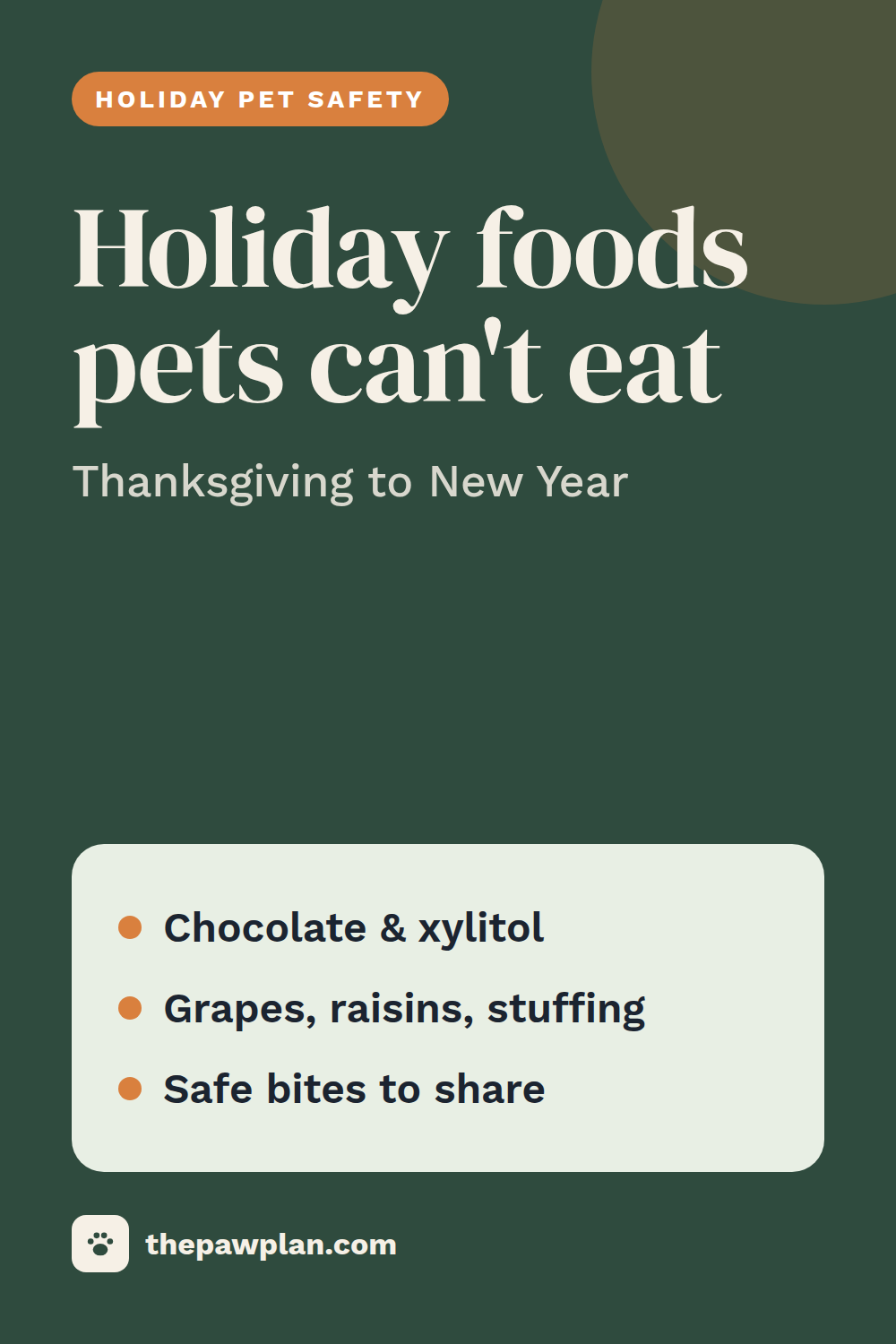
Save this for later.
Pin it to your pet board so it's there when you need it.
The Paw Plan shares general information, not veterinary advice. Every pet is different, so check with your vet about your pet's health, diet and care.
More guides you'll like
Pet-safe Christmas: trees, decorations and holiday plants
A tree full of dangling toys, new plants and piles of ribbon: to a pet, December looks like a playground. Here's how to decorate without a trip to the emergency vet.
Read the guide →Halloween pet safety: candy, costumes and trick-or-treaters
Halloween is fun for people and confusing for pets: strange costumes, a doorbell that never stops and a bowl of candy at nose height. Here's how to keep the night safe and calm.
Read the guide →Pet first aid kit checklist
A small kit and the right phone numbers help you stay calm in a scary moment and get your pet to help faster.
Read the guide →One easy pet-care tip a week.
Short, practical and friendly. Join free and get our printable pet emergency contact card right away.