Traveling for the holidays and can't bring your pet? Boarding can be a great option: trained staff, a secure space and, for many dogs, lots of company. The key is planning ahead. Holiday weeks are the busiest of the year for boarding facilities, and most need vaccine records before they'll accept a booking.
If you're still deciding between boarding and a sitter, see our guide to choosing a pet sitter. Many cats, senior pets and anxious pets do better at home.
Boarding or a sitter?
| Boarding | Pet sitter at home | |
|---|---|---|
| Best for | Social dogs, pets who need supervision around the clock, homes that can't host a sitter | Cats, seniors, anxious pets, multi-pet homes |
| Pros | Staff on site, secure space, often play time | Familiar home, own routine, no new germs |
| Watch for | Noise, stress, contagious coughs, holiday surcharges | Less supervision between visits, trust and keys |
6 to 8 weeks before: book and tour
- Book early. Popular places often fill up weeks or even months before Thanksgiving and Christmas. Ask about minimum stays, holiday surcharges and holiday drop-off and pick-up hours.
- Tour in person. Look for clean, dry kennels, fresh water, secure fencing and doors, and calm, attentive staff. A good place is happy to show you where your pet will sleep.
- Ask the right questions (list below).
- Book a trial. A day of daycare or a single night is the best way to see how your pet copes before a long holiday stay.
Questions to ask on the tour
- Is someone on site overnight?
- Which vet do you use for emergencies, and will you call my vet?
- How often are dogs taken out, and is group play optional?
- Can I bring my pet's own food? Will you give medicines, and is there a fee?
- Are cats housed away from dogs?
- Which vaccines and parasite prevention do you require, and when must they be given?
- Do you send updates or photos?
- What is the full price, including holiday fees, extra play time and medication?
3 to 4 weeks before: vaccines and records
Requirements vary, so ask the facility for its exact list. Common requirements include:
- Dogs: rabies, DHPP (distemper-parvo combination) and Bordetella (kennel cough). Some places also ask for canine influenza.
- Cats: rabies and FVRCP.
- Flea and tick prevention, and sometimes a recent fecal test.
Many facilities want vaccines given at least several days to two weeks before the stay, so don't leave it to the last minute. Ask your vet for printed or emailed records, and keep a copy in one place. Our guide to keeping vaccine records shows a simple system, and our printable pet health record keeps every date on one page.
The week before: pack
- Food: your pet's usual food, measured into daily bags, plus two extra days in case of travel delays. A sudden food change can upset the stomach.
- Medicines in the original labeled containers, with clear written instructions (what, how much, when).
- A one-page care sheet: feeding amounts, allergies, habits, fears and anything that helps your pet relax.
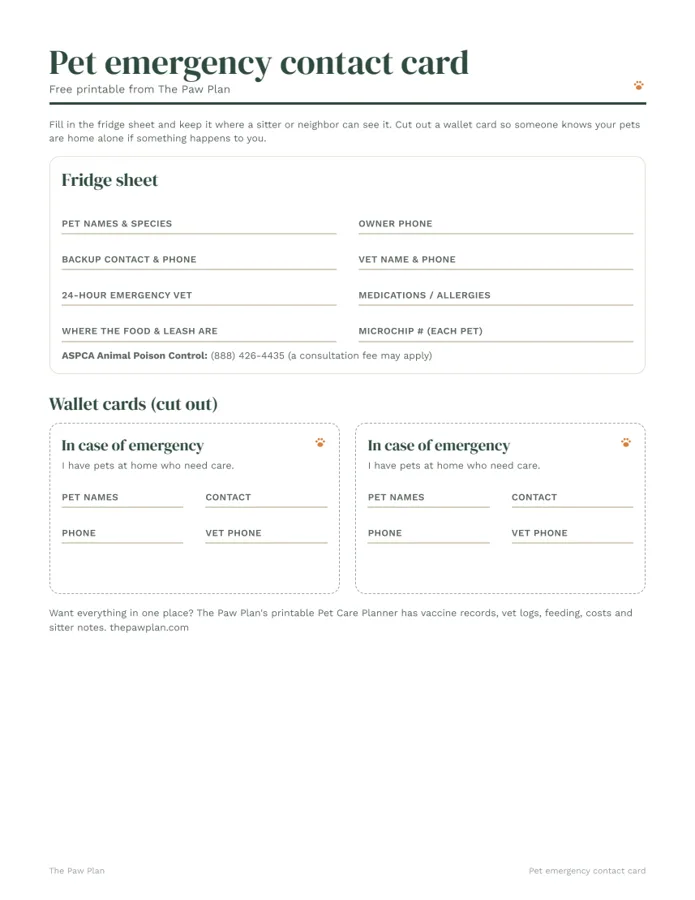
- Contacts: your phone number, a local backup person and your vet's name and number.
- Collar with an ID tag, and a leash for drop-off.
- A small comfort item, like a T-shirt that smells like you. Pick something washable that you won't mind losing.
Check with the facility before packing beds, bowls or toys. Many provide their own, and rules differ. Our pet sitter checklist covers what to write on the care sheet, and it works just as well for boarding.
Help your pet get ready
A little practice makes the first night much easier, especially for pets who have never stayed away from home.
- Practice short separations. Leave your pet with a friend, at daycare or alone at home for short, positive stretches in the weeks before.
- Get used to a crate or kennel if the facility uses one. Meals and treats in the crate help it feel normal.
- Keep the routine steady. Avoid changing food, grooming products or medicines right before the stay unless your vet advises it.
- Book grooming before, not during. If your dog needs a bath or nail trim, doing it a few days before drop-off keeps things simple.
Special cases
- Puppies: ask whether the facility accepts puppies who haven't finished their vaccine series. Many don't, so check your puppy's schedule with your vet first.
- Seniors and pets with health conditions: ask who gives medicines, how they watch for changes and whether a vet is on call. A quieter room away from busy play areas can help. For some seniors, a sitter at home or a vet-run boarding service is a better fit.
- Anxious pets: talk to your vet ahead of time. A trial stay, a comfort item and a quieter setup can all help.
- Multi-pet homes: ask whether pets from the same family can share a room, and whether that costs less.
Red flags on a tour
Trust your instincts. Walk away if the facility won't let you see where pets sleep, doesn't ask for vaccine records, smells strongly of urine, has dirty water bowls, or can't tell you who is there overnight and which vet they use in an emergency.
Drop-off day
- Exercise your dog before drop-off, so they arrive a little tired.
- Keep goodbyes short and cheerful. Long, emotional goodbyes can make pets more anxious.
- Confirm your pick-up time, holiday hours and the best number to reach you.
Coming home
Many pets come home tired, thirsty and a bit overexcited. Offer water in small amounts at first, keep the first day quiet and go back to your normal routine. Mild tiredness or a softer stool for a day can happen after the excitement. Call your vet if you notice coughing, not eating, vomiting, diarrhea that lasts more than a day, or anything that worries you.
Budget for it
Boarding costs add up over a long holiday: nightly rates, holiday surcharges, extra play time, medicines and a pre-trip vet visit for vaccines. Add them to your yearly plan with our free pet cost calculator, or see how to budget for a pet.
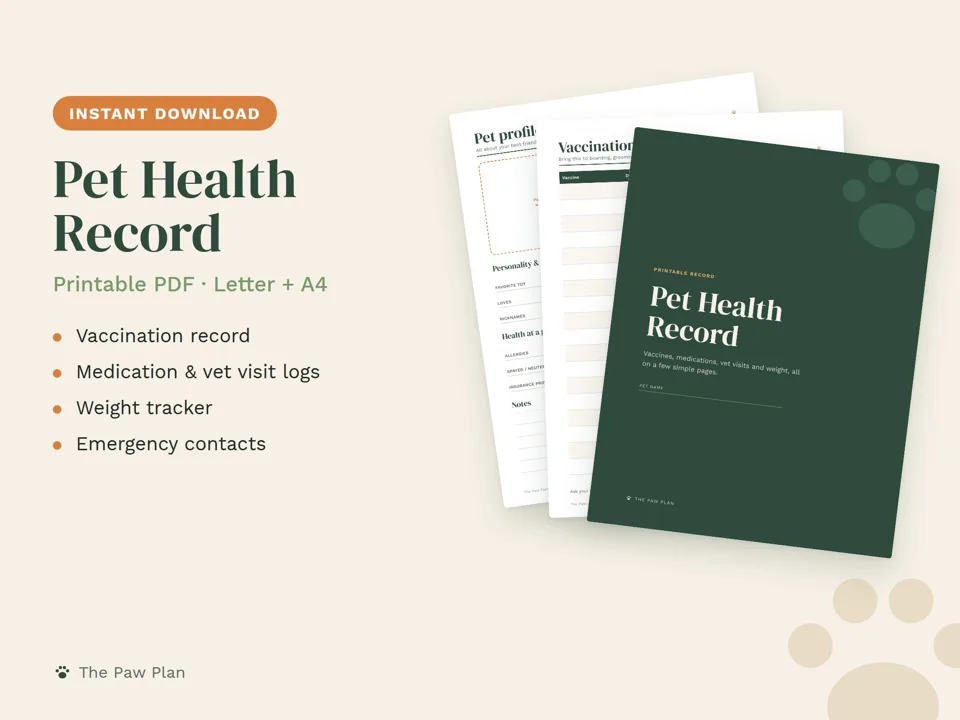
Never lose track of vaccines and vet visits.
Our printable pet health record keeps vaccines, meds, weight and vet visits together. Instant download.
Try the numbers for your pet
Our free pet cost calculator works it out in seconds. No sign-up.

Shopping for a pet person?
Funny tees and mugs, embroidered hats, engraved bracelets and instant-download planners for dog and cat people. Order made-to-order gifts by early December.
Questions people ask
How far in advance should I book holiday boarding?
As early as you can. For Thanksgiving, Christmas and New Year's, many facilities fill up weeks or even months ahead. Booking by early fall gives you the most choice.
What vaccines does my dog need for boarding?
Most facilities ask for rabies, DHPP and Bordetella (kennel cough), and some also ask for canine influenza. Many want vaccines given at least several days to two weeks before the stay. Ask the facility for its exact list and talk to your vet.
Should I bring my pet's own food to boarding?
Usually yes. Sticking to your pet's normal food helps prevent stomach upset. Pack it in daily portions with a couple of extra days in case you're delayed.
Is boarding or a pet sitter better for cats?
Many cats are happier at home with a sitter, because new places and dog noise can stress them. If you board a cat, choose a place with a separate, quiet cat area.
Is it normal for my dog to be tired after boarding?
Yes. Many dogs are tired and thirsty after the excitement of boarding. Call your vet if your dog coughs, won't eat, has ongoing vomiting or diarrhea, or seems unwell.
Save this for later.
Pin it to your pet board so it's there when you need it.
The Paw Plan shares general information, not veterinary advice. Every pet is different, so check with your vet about your pet's health, diet and care.
More guides you'll like
Pet sitter checklist: what to leave before you travel
Clear instructions help your pet feel safe and your sitter feel confident. Here's everything to write down.
Read the guide →How to choose a pet sitter you can trust
A good sitter keeps your pet's routine steady while you're away. Here's how to find one and what to ask.
Read the guide →How to keep track of your pet's vaccines and vet records
Boarding, groomers, daycare and new vets all ask for vaccine records. A simple system saves a lot of scrambling.
Read the guide →One easy pet-care tip a week.
Short, practical and friendly. Join free and get our printable pet emergency contact card right away.