Supplies to have ready
- Litter box and litter. A good rule is one box per cat, plus one extra.
- Food and water bowls, and the same food the shelter or breeder used
- A carrier for the trip home and vet visits
- Scratching post, tall and sturdy enough not to wobble
- Bed or blanket and a hiding spot, like a covered bed or a box
- Toys such as wand toys and small balls
- Collar with ID tag (breakaway style) and a microchip if not already done
- Brush and nail clippers
Set up a safe room
Start your cat in one quiet room with the litter box, food, water, bed and a hiding spot. Keep the litter box away from the food. Let your cat explore the rest of the house after a few days, once they're eating and using the box normally.
Cat-proof your home
- Tuck away cords and hair ties, string and ribbon
- Check that your houseplants are safe for cats. Lilies are especially dangerous
- Close toilet lids, dryers and gaps behind appliances
- Secure window screens
The first week
- Days 1 to 3: keep things quiet. Sit in the room, talk softly and let your cat come to you.
- First vet visit: book a checkup in the first week or two, and bring any records.
- Days 4 to 7: start short play sessions and let your cat explore more of the home.
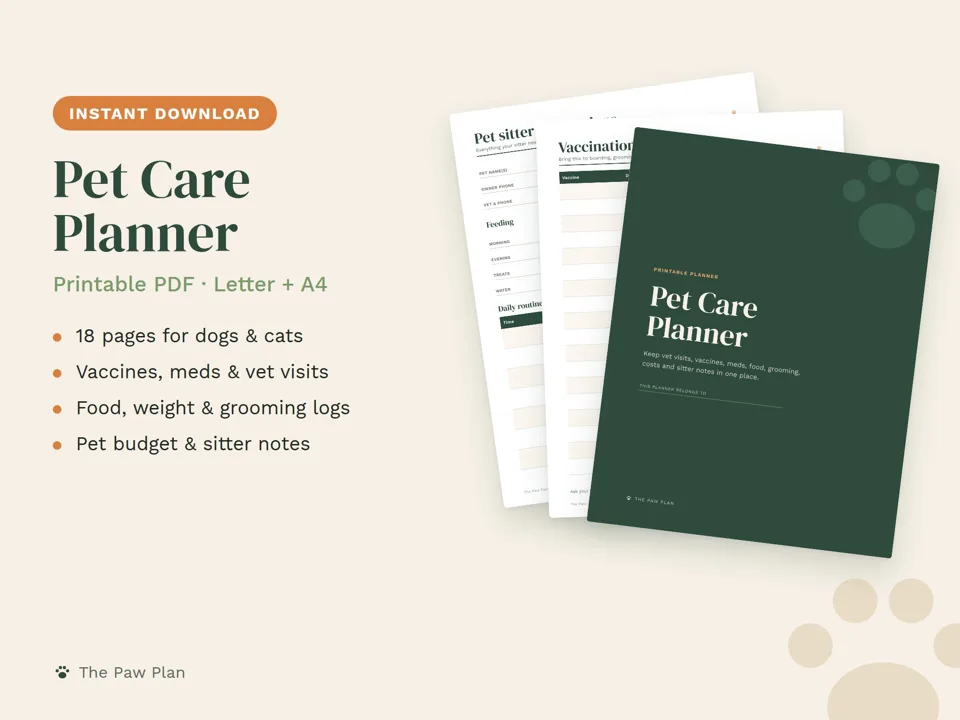
Keep your pet's whole life organized.
Our printable pet care planner keeps vet visits, vaccines, meds, food and costs in one place. Instant download, print at home.
Try the numbers for your pet
Our free cat age calculator works it out in seconds. No sign-up.
Open the calculatorQuestions people ask
How long does it take a cat to adjust to a new home?
Many cats settle in within a week or two, but shy cats can take longer. A quiet safe room helps a lot.
Should I get one litter box or two?
The usual rule is one per cat plus one extra, so one cat does best with two boxes in different spots.
When should a new cat see the vet?
Within the first week or two, even if they seem healthy. Bring any vaccine and medical records you were given.
Save this for later.
Pin it to your pet board so it's there when you need it.
The Paw Plan shares general information, not veterinary advice. Every pet is different, so check with your vet about your pet's health, diet and care.
More guides you'll like
New puppy checklist: everything you need before day one
Bringing home a puppy is exciting and a little chaotic. This checklist covers what to buy, what to set up and what to do in the first week.
Read the guide →Bringing home a rescue dog: what to expect
Rescue dogs need time to trust a new home. The 3-3-3 rule is a simple way to know what's normal and how to help.
Read the guide →A puppy potty training schedule that works
Potty training is mostly about timing. Take your puppy out before they need to go, and reward them every time they get it right.
Read the guide →One easy pet-care tip a week.
Short, practical and friendly. Join free and get our printable pet emergency contact card right away.