Feeding guides on the bag are a starting point, but they often run high. A more reliable way is to start from your cat's calorie needs, then measure every meal.
Step 1: Estimate daily calories
Vets often start with the resting energy requirement (RER) and multiply by a factor for your cat's life stage. For a typical spayed or neutered adult indoor cat, that works out to roughly:
| Cat's weight | About this many calories a day |
|---|---|
| 8 lb | 220 |
| 10 lb | 260 |
| 12 lb | 300 |
Kittens need about twice as much per pound, and less active or overweight cats often need less. Our free pet food calculator has a cat option that works this out for your cat's weight and life stage.
Step 2: Turn calories into food
Check the label for calories: dry food lists "kcal per cup," and wet food lists "kcal per can." Then divide:
- Dry: daily calories ÷ kcal per cup = cups per day
- Wet: daily calories ÷ kcal per can = cans per day
- Mixing both: split the calories between them, for example half from wet and half from dry
Measure with a real measuring cup or a kitchen scale. "A scoop" is often much more than a cup.
Step 3: Watch the weight and adjust
Weigh your cat every few weeks. You should be able to feel the ribs easily without pressing hard, and see a waist from above. If your cat is gaining, cut food by about 10% and check again in a few weeks.
Don't forget treats
Treats should stay under about 10% of daily calories. Count them in the total.
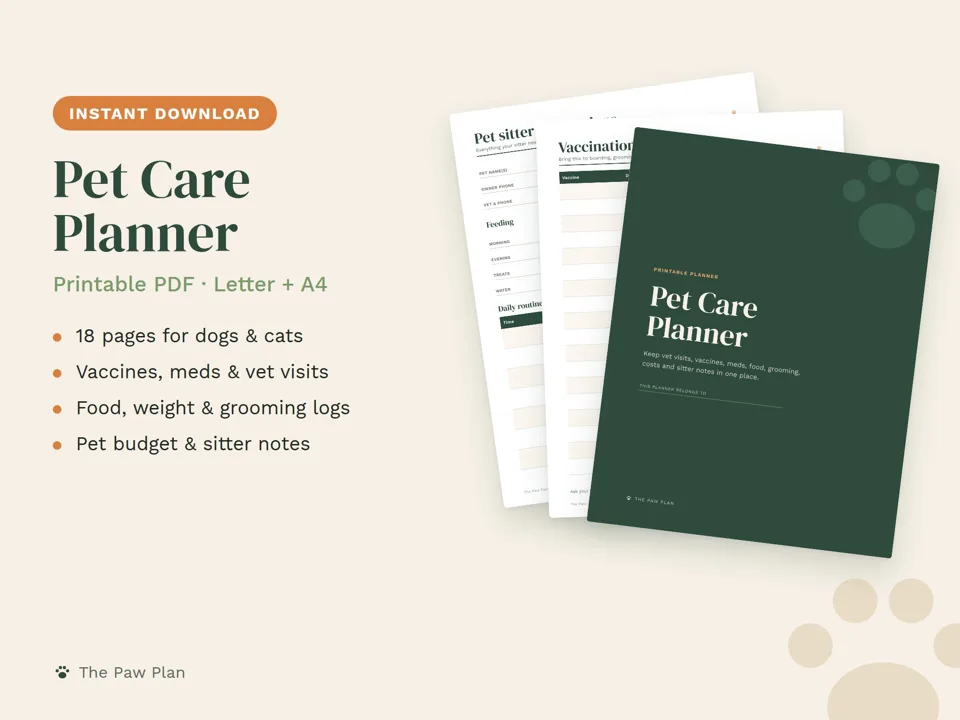
Stay consistent with meals, treats and weight.
Our pet care planner includes a feeding schedule, weight tracker and vet log. Instant download.
Try the numbers for your pet
Our free pet food calculator works it out in seconds. No sign-up.
Open the calculatorQuestions people ask
How many times a day should I feed my cat?
Most adult cats do well with two or more measured meals a day. Some cats like several small meals. Kittens usually eat three or four times a day.
Is free-feeding OK for cats?
Leaving food out all day makes it easy for many cats to overeat. Measured meals make it easier to keep a healthy weight.
How do I know if my cat is overweight?
If you can't easily feel the ribs, or can't see a waist from above, your cat may be carrying extra weight. Your vet can confirm and suggest a target.
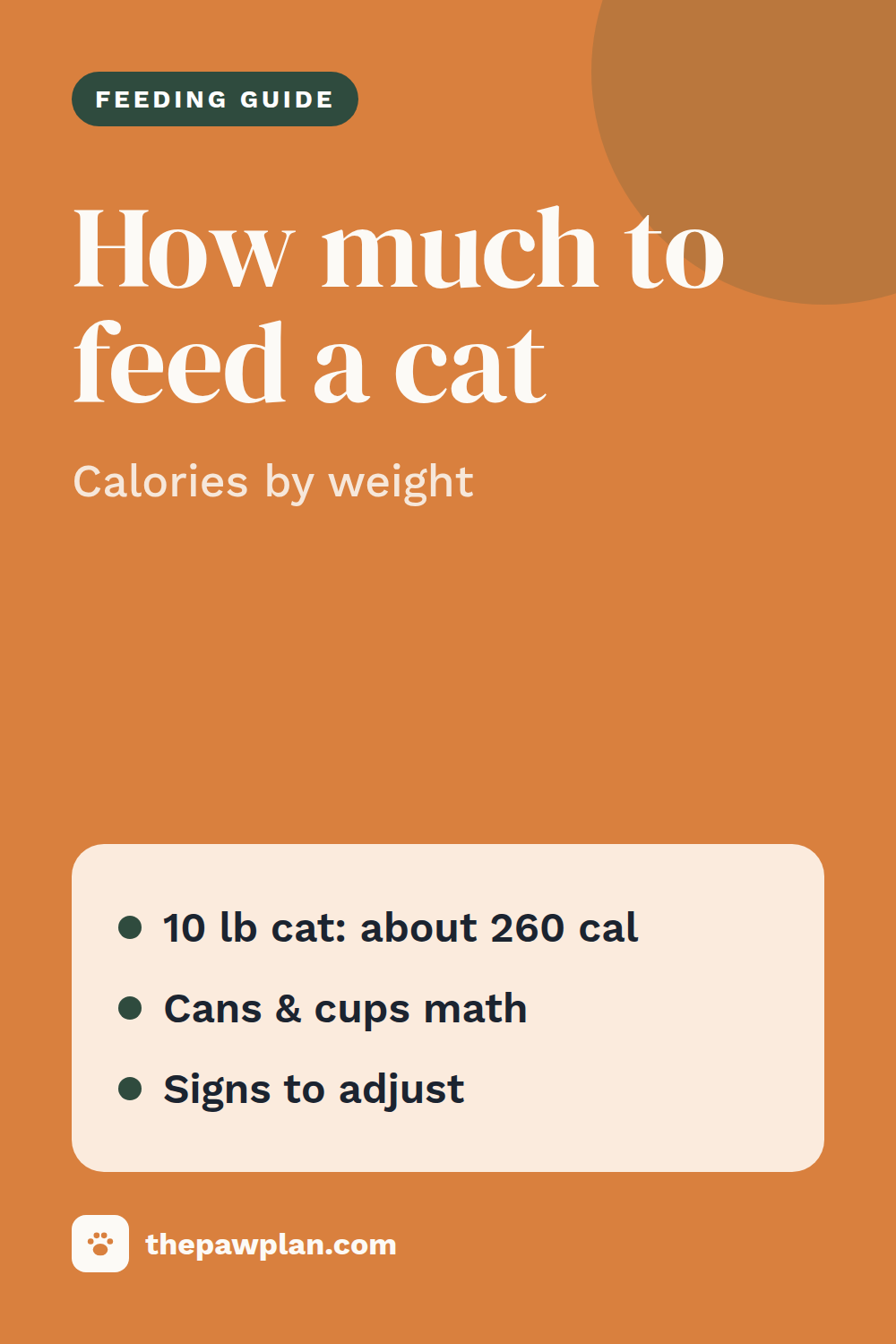
Save this for later.
Pin it to your pet board so it's there when you need it.
The Paw Plan shares general information, not veterinary advice. Every pet is different, so check with your vet about your pet's health, diet and care.
More guides you'll like
How much should I feed my dog?
The right amount depends on your dog's weight, age, activity and food. Here's a simple way to find a starting point and adjust.
Read the guide →Dog years to human years: the real chart
The "times seven" rule is a myth. Dogs grow up fast, and big dogs age faster than small ones.
Read the guide →Cat years to human years: chart and life stages
Cats grow up in a hurry, then age about four human years for every cat year. Here's the chart.
Read the guide →One easy pet-care tip a week.
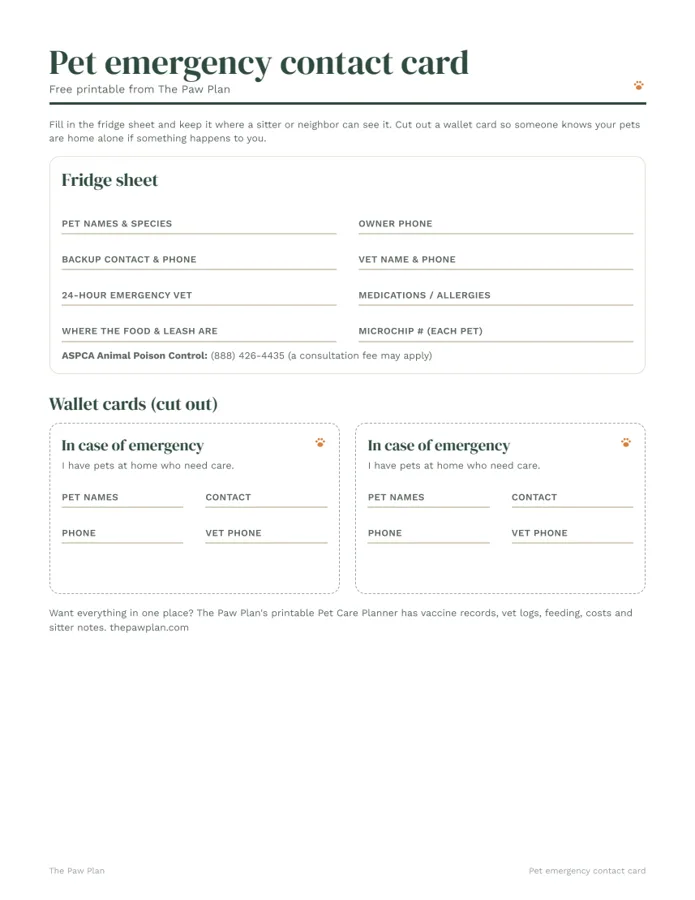
Short, practical and friendly. Join free and get our printable pet emergency contact card right away.