How cold is too cold for dogs? A simple temperature guide
Some dogs love a frosty morning and some start shivering at the door. Here's how to tell when it's too cold for your dog, how long to stay out, and how to keep them warm and safe all winter.
There's no single number that's "too cold" for every dog. A fluffy dog bred for snow and a tiny short-haired dog feel the same 30°F morning very differently. The chart below gives you a simple starting point, and the rest of this guide shows how to adjust it for your own dog.
1. The quick temperature chart
These are rough guides for healthy adult dogs, based on the air temperature with wind and wet weather taken into account. When in doubt, go shorter.
| Temperature | Small or short-coated dogs | Thick-coated dogs |
|---|---|---|
| Above 45°F (7°C) | Fine for most dogs. Very small or thin dogs may like a light layer. | Comfortable. Normal walks and play. |
| 32–45°F (0–7°C) | Add a coat or sweater and keep walks a bit shorter. | Usually fine. Many love it. |
| 20–32°F (-7–0°C) | Short walks only, with a coat. Watch closely for shivering. | Fine for walks, but check paws and don't leave them outside for long. |
| 0–20°F (-18 to -7°C) | Quick potty trips. Real risk of getting too cold. | Shorter walks. Keep moving and head in at the first sign of discomfort. |
| Below 0°F (-18°C) | Out and back in. Bathroom breaks only. | Brief outings only. Frostbite can happen fast on ears, tail and paws. |
Wind, rain and snow change everything. A windy 35°F day or a wet coat can chill a dog faster than a still, dry 25°F day. Use the "feels like" temperature from your weather app, not just the number on the thermometer.
2. What makes some dogs feel the cold more
- Size. Small dogs lose body heat much faster than big ones, and they're closer to the cold ground and snow.
- Coat. Short, single or thin coats offer little protection. Thick double coats, like our fluffy white dog Snow's, trap warm air close to the skin.
- Body fat. Lean and very slim dogs have less natural insulation.
- Age. Puppies can't control their body heat well yet, and senior dogs often feel the cold more, especially with stiff joints. Not sure which life stage your dog is in? Our dog age calculator shows it in human years.
- Health. Dogs with heart, kidney or hormone problems, arthritis or diabetes can struggle in the cold. Ask your vet what's safe for your dog.
- Short legs. Long-bodied, short-legged dogs, like our corgi Biscuit, get their bellies wet and cold in even a little snow.
- What they're used to. A dog who lives somewhere cold all year usually copes better than one meeting their first snowy winter.
Look up your dog's breed in our dog breed lookups for size and life stage at a glance.
3. How long can a dog be outside in the cold?
A loose rule of thumb for walks:
- Above freezing: normal walks for most dogs, with a coat for the small and short-coated ones.
- 20–32°F: around 10 to 30 minutes for most dogs, at the shorter end for small, young or older dogs.
- Below 20°F: 5 to 15 minutes for big, thick-coated dogs, and just a few minutes for small or short-coated dogs.
- Below 0°F: quick bathroom breaks for every dog.
Two or three short outings are kinder than one long one. Make up the missed exercise indoors with tug, hide-and-seek with treats, a food puzzle or a few minutes of training. Keep moving while you're outside; standing still in the cold chills dogs quickly.
4. Signs your dog is too cold
Early signs (head home and warm up): shivering, lifting paws off the ground, a tucked tail, hunched back, slowing down or stopping, whining, and pulling back toward the house.
Serious signs (call your vet now):
- Strong shivering that then stops, weakness, or seeming very sleepy or confused (possible hypothermia).
- Stiff, clumsy movement or very slow breathing.
- Skin on the ears, tail, toes or belly that looks pale, grey or blue, feels hard or cold, or seems painful (possible frostbite).
While you call, bring your dog into a warm room, dry them off and wrap them in a warm (not hot) blanket. Don't rub frostbitten skin, and never use a heating pad, hair dryer on high or hot water, which can burn cold skin.
5. Keeping your dog warm on winter walks
- Get the coat right. It should cover the back and belly, fit snugly without rubbing, and let your dog move freely. Put it on indoors so your dog stays warm from the first step.
- Dry is warm. A wet coat loses its warmth fast. Towel your dog off after snowy or rainy walks, including the belly and between the toes.
- Look after the paws. Ice, rock salt and cold pavement are hard on pads. Our winter paw care guide has a simple before-and-after-walk routine.
- Walk in the warmest part of the day when you can, usually late morning to mid-afternoon.
- Stay visible. Winter evenings get dark early. A light-up collar or reflective leash helps drivers see you both.
- Keep your dog on a leash near ice. Frozen ponds and rivers can look solid and give way.
- Skip the long haircut. If your dog is groomed, ask for a longer winter trim.
6. Cold-weather safety at home
- Bring dogs indoors. Dogs should sleep inside in cold weather. A dog who must be outside for a while needs a dry, raised, windproof shelter with thick bedding and unfrozen water, and should still come in when it's very cold. Many places also have laws about pets left out in the cold.
- Never leave a dog in a parked car in winter. A car cools down like a fridge and holds the cold.
- Watch for antifreeze. It tastes sweet to pets and is very toxic. Wipe up spills right away and keep containers sealed. You can check other winter hazards in our free pet food and toxin checker.
- Keep heaters safe. Use space heaters with tip-over shut-off, keep them out of tail-wagging range, and give dogs a warm bed away from drafts instead.
- Food and water. Active dogs who spend lots of time outdoors in winter may need a little more food. Ask your vet before changing amounts, and keep fresh water easy to reach, since dry indoor heat is thirsty work.
7. Don't forget the cats
Cats feel the cold too. Indoor cats will do fine with a cozy bed or a blanket in a sunny spot. If cats roam outside in your area, bang on the hood of your car or honk before starting it on cold mornings, since cats sometimes crawl into warm engines to sleep.
When to call your vet
Call your vet if you notice any of these:
- Signs of hypothermia: weakness, strong shivering that stops, stiffness, confusion or very slow breathing.
- Signs of frostbite on the ears, tail, toes or belly.
- Your dog licked antifreeze or ice melt, or ate something toxic. Don't wait for signs: call your vet, an emergency vet or an animal poison control line now. US animal poison control lines: (888) 426-4435 or (855) 764-7661 (a consultation fee may apply).
- Limping, cracked or bleeding paws that don't heal, or a senior dog who seems much stiffer in the cold.
- You're not sure what's safe for a puppy, senior or a dog with a health condition. Your vet knows your dog best.
Cold-weather checklist
- Check the "feels like" temperature before every walk.
- Coat or sweater ready for small, short-coated, young or older dogs.
- Shorter, more frequent walks on very cold days.
- Indoor games planned to make up the exercise.
- Towel by the door for wet bellies and paws.
- Paws checked and wiped after every walk.
- Reflective leash or light-up collar for dark evenings.
- Warm bed away from drafts, and your dog sleeping indoors.
- Antifreeze and ice melt stored safely.
- Your vet's number and the nearest emergency vet saved in your phone.
Heading into the holidays? See the holiday hub for every big day from Thanksgiving to New Year.
Cold out? The walk still happens.
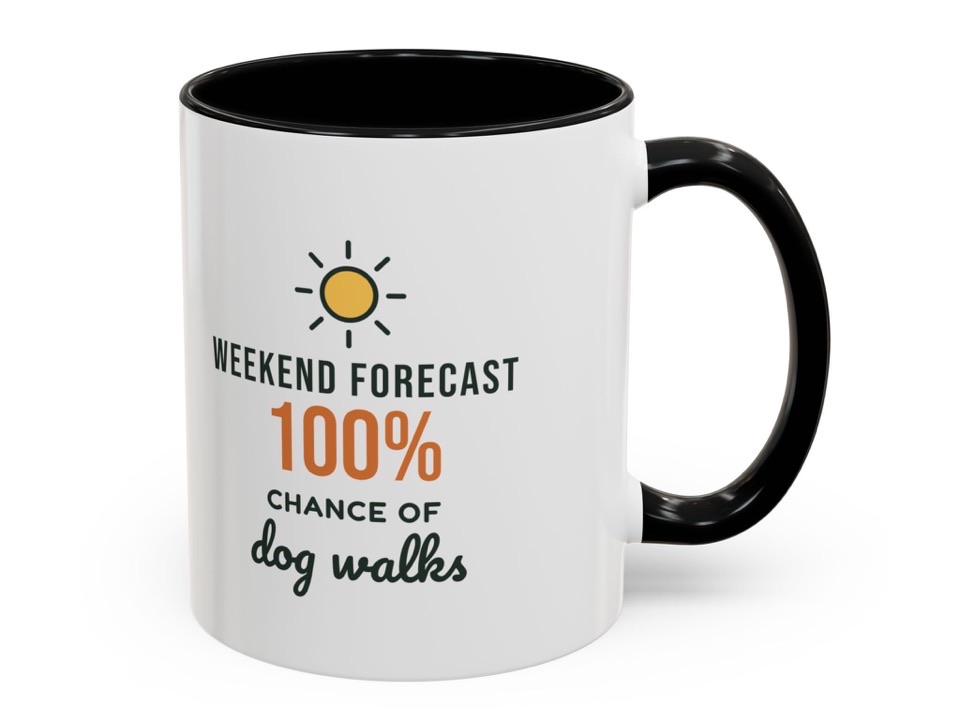
Our "Weekend Forecast: 100% Chance of Dog Walks" mug is made for the warm-up after a frosty morning walk. Made to order and shipped from the US. Also on a soft cotton tee.
How old is your dog in human years?
Puppies and seniors feel the cold more. Our free dog age calculator shows your dog's life stage in seconds, adjusted for size.


Shopping for a pet person?
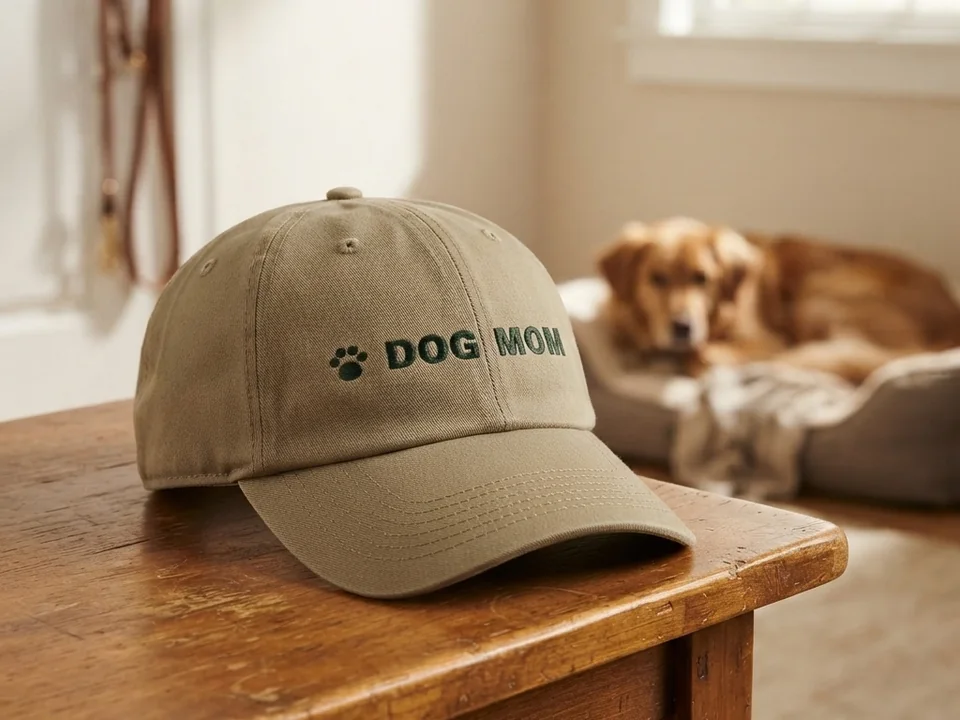
Funny tees and mugs, embroidered hats, engraved bracelets and instant-download planners for dog and cat people. Christmas delivery: order by Nov 30 (personalized items by Nov 25).
Questions people ask
How cold is too cold to walk a dog?
For most healthy dogs, walks are fine above about 45°F. Between 20°F and 45°F, small, short-coated, very young and older dogs need a coat and shorter walks. Below about 20°F, keep every dog's outings short, and below 0°F stick to quick potty breaks. Wind, rain and snow make it feel colder, so adjust on those days.
What temperature is too cold for a dog to sleep outside?
Dogs should sleep indoors in cold weather. Once nights drop toward freezing, even thick-coated dogs are safer inside, and small or short-coated dogs need to be inside well before that. Check your local rules too, since many areas have laws about leaving pets out in the cold.
Do dogs need a coat in winter?
Some do. Small dogs, short-coated or thin dogs, puppies, seniors and dogs with health problems lose heat fast and often benefit from a well-fitted coat or sweater below about 45°F. Thick, double-coated breeds usually don't need one unless it's very cold, wet or windy.
How can I tell if my dog is too cold?
Shivering, holding up paws, a tucked tail, hunched posture, slowing down, whining or trying to turn back home are common signs. Head inside and warm your dog up. Weakness, stiff or clumsy movement, very slow breathing or pale, grey or blue skin are urgent: call your vet right away.
Is my house too cold for my dog?
If you're comfortable indoors, most dogs are too. Puppies, seniors, small and short-coated dogs may like a raised bed away from drafts, a blanket to burrow in, or a sweater if you keep the heat low at night.
Save this for later.
Pin it to your pet board so it's there when you need it.
The Paw Plan shares general information, not veterinary advice. Every pet is different, so check with your vet about your pet's health, diet and care.
More guides you'll like
Winter paw care for dogs: salt, ice, snow and cracked pads
Cold pavement, rock salt and dry indoor heat are tough on paws. Here's a simple before-and-after-walk routine that keeps your dog's feet comfortable all winter.
Read the guide →How to keep your dog calm on Thanksgiving: guests, food and a quiet room
Doorbells, new people and a turkey at nose height. Set up a quiet room, plan a long walk and keep the feast off the floor for a calm holiday.
Read the guide →How to calm a dog scared of fireworks: a New Year's Eve plan
Loud bangs and bright flashes are hard on a lot of dogs. Build a safe den, walk before dark, cover the noise and keep the doors shut until the last one fades.
Read the guide →One easy pet-care tip a week.
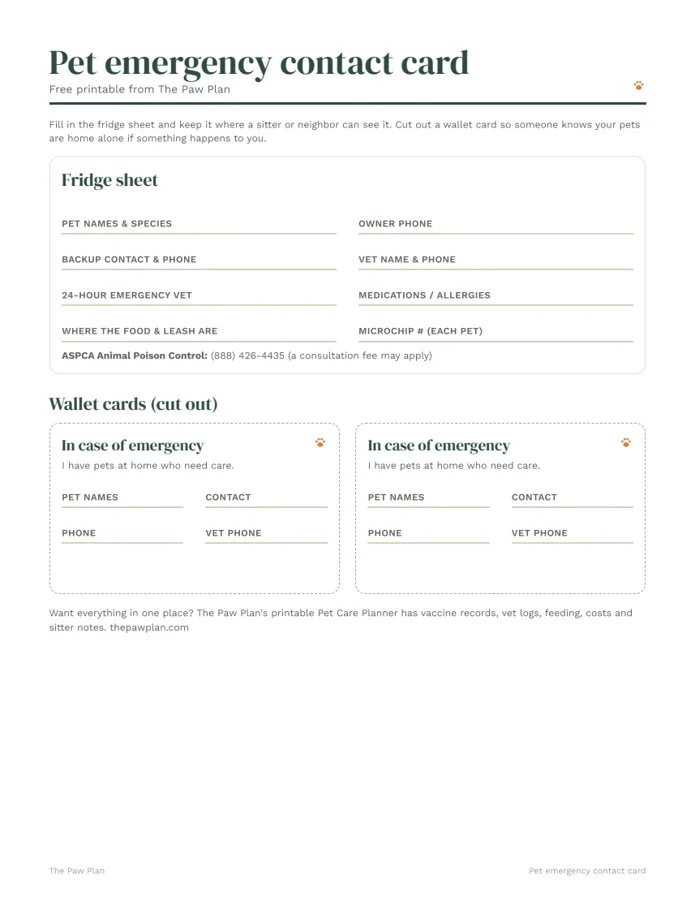
Short, practical and friendly. Join free and get our printable pet emergency contact card right away.
One email a week. Unsubscribe any time.