How to crate train a puppy: a simple step-by-step schedule
A crate can become your puppy's favorite nap spot, and it makes potty training and bedtime much easier. Here's how to pick the right crate, introduce it gently and build a daily routine that works.
Dogs like having a small, quiet spot that is theirs. Crate training simply teaches your puppy that the crate is that spot: a safe place to nap, chew a toy and sleep through the night. Done gently, most puppies take to it within a couple of weeks. This is general information, not veterinary advice, so check with your vet about your own puppy.
1. Why crate train at all?
- Potty training goes faster. Puppies try not to soil where they sleep, so a crate helps them learn to hold it between trips outside. Pair it with our puppy potty training schedule.
- It keeps your puppy safe when you can't watch them: no chewed cables, shoes or houseplants.
- It builds good sleep habits. Puppies need a lot of sleep, and a crate helps them switch off.
- Travel, vet stays and grooming are less stressful for a dog who already feels relaxed in a crate.
A crate is a bedroom, not a time-out corner. Never use it as punishment.
2. Pick the right crate and set it up
- Size. Your puppy should be able to stand up without ducking, turn around and lie flat on their side. Much bigger than that and one end can become the bathroom.
- Buy once. An adult-size crate with a divider panel grows with your puppy. Not sure how big your puppy will get? Look up the breed in our dog breed lookups.
- Wire or plastic. Wire crates are airy and fold flat. Plastic ones feel more like a den. Either works, and a light blanket over part of a wire crate makes it cozier. Leave plenty of airflow.
- Where to put it. Somewhere the family spends time during the day, away from heaters, drafts and direct sun. For the first weeks, many people keep the crate by the bed at night.
- What goes inside. A washable mat or blanket and one or two safe chew toys. Take off collars and harnesses before crate time so nothing can snag.
3. The first week, step by step
Keep sessions short and happy, a few minutes at a time, several times a day. Move on only when your puppy is relaxed at the current step.
| When | What to do | Goal |
|---|---|---|
| Days 1–2 | Door open. Toss treats just inside, then further back. Let your puppy walk in and out freely. Praise calmly. | Puppy goes in on their own. |
| Days 2–3 | Feed meals in the crate with the door open. Add a cue word such as "crate" or "bed" as they step in. | Crate means good things. |
| Days 3–4 | Close the door while they eat or chew a toy. Open it before they finish, then a little later each time. | Calm with the door closed for a few minutes. |
| Days 4–5 | Door closed, you sit nearby. Build up from 5 to 15 minutes. Then move around the room. | Settles while you're in sight. |
| Days 5–7 | Step out of the room for a minute, then a few minutes, then longer. Come back quietly, with no big hello. | Settles for 20–30 minutes alone. |
These days are a guide, not a deadline. Some puppies fly through in a few days and some need two or three weeks. If your puppy seems worried, go back one step.
4. A sample day with a crate
Young puppies do best with a simple rhythm: potty, play, potty, nap. Here's what a day might look like for a puppy of about 8 to 12 weeks.
| Time | What happens |
|---|---|
| 7:00 am | Straight outside for a potty trip, then breakfast (in the crate, door open). |
| 7:30 am | Potty again, then play and a little training. |
| 8:30 am | Potty, then a crate nap of 1 to 2 hours. |
| 10:30 am | Potty the moment they wake, then play. |
| 12:00 pm | Lunch, potty, short play, then another crate nap. |
| Afternoon | Repeat the pattern: potty, play, potty, nap. |
| 5:30 pm | Dinner, potty, family time and gentle play. |
| 10:00 pm | Last potty trip, then into the crate for the night. |
Not sure how much to put in the bowl at each meal? Our free dog food calculator gives you a starting point to check with your vet.
5. How long is too long in the crate?
A common rule of thumb for daytime is about one hour for each month of age. These are upper limits for a puppy who has just been out to potty and had some play, not targets.
| Puppy's age | Longest daytime stretch |
|---|---|
| 8–10 weeks | 30 to 60 minutes |
| 11–14 weeks | 1 to 3 hours |
| 15–16 weeks | 3 to 4 hours |
| 17 weeks and older | 4 to 5 hours at most |
If you're out for longer than that, ask a neighbor, friend or dog walker to give your puppy a midday break, or set up a puppy-proofed pen with a potty area instead. Nights are different: a sleepy puppy can last longer, but young ones still need a trip outside.
6. Crate training at night
- Keep the crate close. Beside your bed for the first weeks, so your puppy can hear and smell you.
- Wind down first. Calm play, a last potty trip, then bed. Pick up the water bowl an hour or so before bedtime unless your vet says otherwise.
- Expect a night trip or two. Most puppies under about 12 weeks can't hold it all night. Set an alarm for the middle of the night rather than waiting for crying.
- Keep night trips boring. Out, potty, quiet praise, back to bed. No play and no bright lights.
- Stretch it slowly. Move the alarm 15 to 30 minutes later every few nights as your puppy stays dry.
7. What to do about crying and whining
A few minutes of grumbling while a puppy settles is normal. Longer crying usually means something is missing or the step was too big.
- Check the basics. Does your puppy need the bathroom? Are they hungry, thirsty, too hot, too cold or full of energy?
- If a potty trip is likely, take them out calmly on a leash, then straight back to the crate.
- If the basics are covered, wait for a few quiet seconds before opening the door, so quiet is what gets rewarded.
- If the crying builds, go back a step: shorter time, you sitting closer, a chew toy to work on.
- Never shout, bang on the crate or use it as punishment. It makes the crate scary and the crying worse.
8. Common mistakes to skip
- Going too fast, such as shutting the door for an hour on day one.
- Only using the crate when you leave, so the crate comes to mean being alone. Use it for naps while you're home too.
- Crating a puppy who hasn't had a potty trip and some play first.
- Leaving a puppy crated for most of the day and all night.
- Making a fuss when you leave or come back. Keep both low-key.
- Letting children climb in or bother a puppy in the crate. It should be a do-not-disturb zone.
When to call your vet
Call your vet, and ask about a qualified trainer or behaviorist, if you notice any of these:
- Panic in the crate: heavy drooling, frantic digging or biting at the bars, or hurting teeth or paws trying to get out.
- Accidents in the crate again and again even with frequent potty trips, or peeing much more often than usual.
- Diarrhea, vomiting, not eating or seeming unwell.
- Crying that hasn't eased after a couple of weeks of gentle, steady practice.
Some dogs with strong fear of being shut in or left alone need a different plan. Your vet knows your puppy best.
Crate training checklist
- Crate sized so your puppy can stand, turn around and lie flat.
- Divider panel set for your puppy's size today.
- Washable mat and a safe chew toy inside.
- Collar and harness off before crate time.
- Treats and meals in the crate for the first week.
- Potty trip and play before every crate session.
- Crate time kept within the limit for your puppy's age.
- Crate beside the bed for the first nights, with a night potty trip planned.
- Quiet rewarded, and never the crate as punishment.
- A midday helper lined up for long days.
Just brought your puppy home? Start with our new puppy checklist, and keep the puppy vaccination schedule handy for your first vet visits.
Keep the routine on the fridge
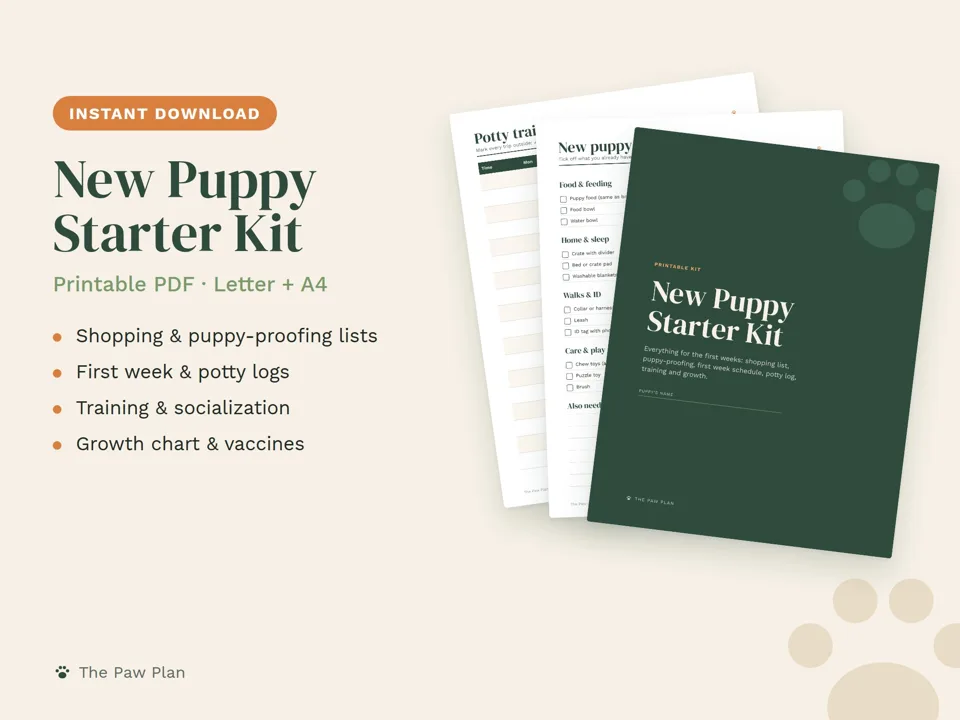
Our New Puppy Starter Kit has a potty log, training tracker, daily routine pages and a vaccine record in one printable pack, so everyone in the house follows the same plan.
How old is your puppy in human years?
Crate time limits change as your puppy grows. Our free dog age calculator shows your dog's life stage in seconds, adjusted for size.


Shopping for a pet person?
Funny tees and mugs, embroidered hats, engraved bracelets and instant-download planners for dog and cat people. Christmas delivery: order by Nov 30 (personalized items by Nov 25).
Questions people ask
How long does it take to crate train a puppy?
Most puppies settle into a crate routine within one to three weeks of short, calm daily practice, and some take a little longer. Go at your puppy's pace. If they seem worried, drop back to the last step that went well and build up again more slowly.
How long can a puppy stay in a crate during the day?
A common rule of thumb is about one hour for each month of age, so around two hours for a two-month-old and three hours for a three-month-old, with four to five hours as the most for any dog during the day. Young puppies need potty breaks, play and company in between.
Should I let my puppy cry in the crate?
A little fussing for a few minutes while a puppy settles is normal. Check the basics first: potty, water, exercise and comfort. If the crying builds or your puppy seems panicked, the step was too big. Shorten the time, stay closer and build up again. Ask your vet or a qualified trainer if it doesn't improve.
What size crate does a puppy need?
Your puppy should be able to stand up without ducking, turn around and lie flat on their side. A crate that is much bigger can make potty training harder, so many people buy an adult-size crate with a divider panel and move the divider as the puppy grows.
Should I put a bed and water in the crate?
A washable mat or blanket makes the crate comfortable, as long as your puppy isn't chewing and swallowing it. For short stays most puppies don't need water inside. For longer stays, a clip-on bowl or bottle keeps water from spilling. Take collars and harnesses off before crate time so nothing can snag.
Save this for later.
Pin it to your pet board so it's there when you need it.
The Paw Plan shares general information, not veterinary advice. Every pet is different, so check with your vet about your pet's health, diet and care.
More guides you'll like
Winter paw care for dogs: salt, ice, snow and cracked pads
Cold pavement, rock salt and dry indoor heat are tough on paws. Here's a simple before-and-after-walk routine that keeps your dog's feet comfortable all winter.
Read the guide →How to keep your dog calm on Thanksgiving: guests, food and a quiet room
Doorbells, new people and a turkey at nose height. Set up a quiet room, plan a long walk and keep the feast off the floor for a calm holiday.
Read the guide →How to calm a dog scared of fireworks: a New Year's Eve plan
Loud bangs and bright flashes are hard on a lot of dogs. Build a safe den, walk before dark, cover the noise and keep the doors shut until the last one fades.
Read the guide →One easy pet-care tip a week.
Short, practical and friendly. Join free and get our printable pet emergency contact card right away.
One email a week. Unsubscribe any time.